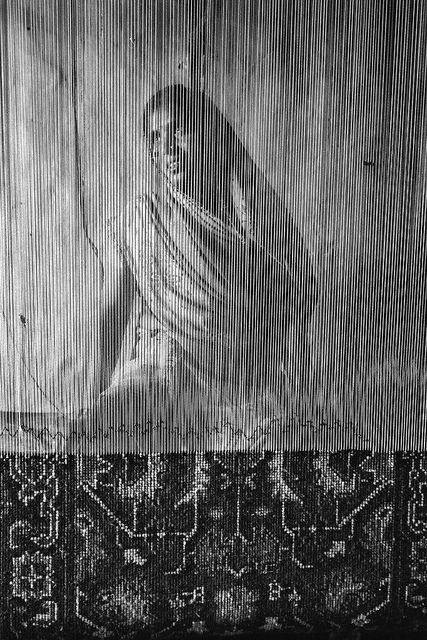
On 27 July 2020, in the middle of the first pandemic year, the Ministry of Textiles issued a gazette notification abolishing the All India Handloom Board. A week or so later, the All India Handicrafts Board went the same way.
Both notifications gave the same reason: the government’s stated vision of minimum government and maximum governance, leaner administrative machinery, and a systematic rationalisation of official bodies. The decision was announced days before National Handloom Day.
It was, by most accounts, a quiet move. There was no debate preceding it and not much reporting after. The sector found out largely by reading the notification.
Six years on, it’s worth asking what was actually lost — because the honest answer is complicated, and the people best placed to answer were not entirely on one side.
WHAT THE BOARD WAS
The AIHB was constituted in 1992 as an advisory body. The Union Textiles Minister chaired it. Membership combined officials from central and state governments with non-official members drawn from the sector itself — weavers, cooperatives, designers, activists, people who worked with clusters.
Its function was advisory rather than executive. It could not disburse funds or enforce anything. What it could do was give the sector a formal seat at the table where policy was discussed, and a mechanism by which people who actually wove could speak to people who actually wrote the schemes.
That is a modest thing to be. It is also, as the sector discovered, quite hard to replace.
THE UNCOMFORTABLE PART
Here is where the story resists a simple telling.
Almost nobody defending the board argued it was working well. Meetings had become infrequent. It had been reconstituted for a two-year term in 2014 and was widely described afterwards as moribund. Critics of its abolition acknowledged this openly — one activist put it as a dysfunctional body that nonetheless shouldn’t have been shut without consulting the people who worked with weavers directly.
Uzramma, a handloom activist and a former vice-chairman of the board, made the more pointed version of the argument: the sector’s problems were yarn sourcing and marketing, and the board was precisely the body that might have been strengthened to address them. The failure wasn’t that it existed. The failure was that it had been allowed to atrophy, and then the atrophy was used as grounds for removal.
Laila Tyabji of Dastkar framed the loss differently — as the closing of the one official forum, however diminished, where weavers and craftspeople could be present in numbers and empowered to advise on policy and spending.
Pavitra Muddaya, who runs the label Vimor and has worked with weaver clusters across India, described the boards as a bridge between weavers and government, covering raw material, credit, markets, loans, housing, welfare of artisans’ children. Her further point is the one that matters most: rules made for weavers’ welfare frequently exist only on paper, with no consequence on the ground.
That is the real function an advisory body performs. Not making policy — noticing when policy isn’t reaching anyone.
WHAT REPLACED IT
Nothing structurally equivalent, though it would be wrong to say nothing at all.
The institutional apparatus around handloom remains substantial. Twenty-nine Weavers’ Service Centres. Eleven Indian Institutes of Handloom Technology. The National Handloom Development Programme and the Raw Material Supply Scheme. The India Handloom Brand, launched in 2015. Handloom Mark, GI tags, e-Pehchan digital identity cards, concessional credit, social security coverage. The Handlooms (Reservation of Articles for Production) Act of 1985 remains in force.
Recent direction has been expansionary rather than otherwise. The Union Budget for 2026-27 points toward a larger National Handloom and Handicraft Programme covering more clusters, higher value addition and stronger branding. In February this year the Textiles Minister set a target of $10 billion in handloom exports by 2031. Some state governments have moved independently — Andhra Pradesh began a free electricity scheme for weavers in April, covering around 93,000 handloom families.
So the sector is not being ignored. It is being administered, funded, branded and targeted.
What it does not have is a body whose job is to tell the government when any of that is failing.
THE PART THAT WAS ALREADY BROKEN
The board’s abolition sits inside a longer decline that predates it and continues after.
Budget allocation for handloom fell from ₹621.51 crore in 2014-15 to ₹485 crore in 2020-21 — a reduction in nominal terms, before accounting for inflation. Exports had been sliding too, from around $370 million in 2013-14 to roughly $344 million by 2019.
The sector employs, on official figures from around the time of the abolition, some 43 lakh people across roughly 24 lakh looms — the second-largest employer in rural India after agriculture. A substantial majority are from SC, ST and OBC communities. Nearly all are day labourers in economic terms, regardless of how their skill is described in a press release.
They had already absorbed demonetisation and the introduction of GST on handloom products before the pandemic arrived. The Atmanirbhar package did not address them directly.
This is the context that makes the board’s removal more than symbolic. A sector with strong outcomes and a functioning feedback loop can afford to lose an advisory committee. A sector already losing money, exports and budget allocation cannot easily afford to lose the mechanism by which it says so.
WHAT SHOULD HAPPEN NOW
Reconstituting the board exactly as it was would achieve very little. It was ineffective before it was abolished, and the people who defended it said as much at the time.
What the sector needs is the function, not the furniture. Specifically:
A body with a defined meeting schedule and published minutes. The AIHB’s central failure was that it could simply stop convening without consequence. Any replacement needs a statutory obligation to meet and to publish what was discussed.
Weavers in the majority, not as garnish. The recurring complaint about the old board was that non-official seats often went to people funded by or close to government. A forum whose members are selected by the body they’re meant to scrutinise isn’t a forum.
A monitoring mandate, not just an advisory one. The Parliamentary Standing Committee has previously identified weak implementation as a central problem in this sector. Schemes exist; they don’t arrive. A body empowered to track delivery — and to say publicly when it hasn’t happened — addresses a different problem than one that merely offers advice at the design stage.
A route for grievances. Yarn pricing, credit access, mislabelled powerloom goods sold as handloom, delayed payments. These are recurring, concrete, and currently have no national forum.
None of this requires new spending of any consequence. It requires a decision that the sector should have a formal voice, and that the voice should be inconvenient sometimes.
WHY IT MATTERS BEYOND THE WEAVERS
There’s a version of this argument that treats handloom as heritage — a thing to be preserved because it’s old and ours.
That framing is part of the problem. It positions the sector as a museum requiring subsidy rather than an industry requiring markets, and it makes the weaver a beneficiary rather than a producer.
Handloom is a working industry employing millions of people, competing against powerloom output that frequently misrepresents itself as handwoven, in a market where buyers cannot tell the difference and were never taught how. It has real problems — raw material cost, credit, distribution, counterfeiting — that are commercial rather than sentimental.
Commercial problems get solved when the people experiencing them can describe them to the people writing the rules.
For twenty-eight years there was a room for that, and it worked badly. For the last six there has been no room at all.
That isn’t leaner government. It’s quieter government, which is a different thing.
Sources: Ministry of Textiles gazette notifications, July–August 2020; contemporaneous reporting in Outlook, The Federal, Deccan Herald and Siasat; Ministry of Textiles replies in Parliament; Union Budget documents. Figures cited are as reported at the time and should be checked against current official data before republication.


Leave a comment