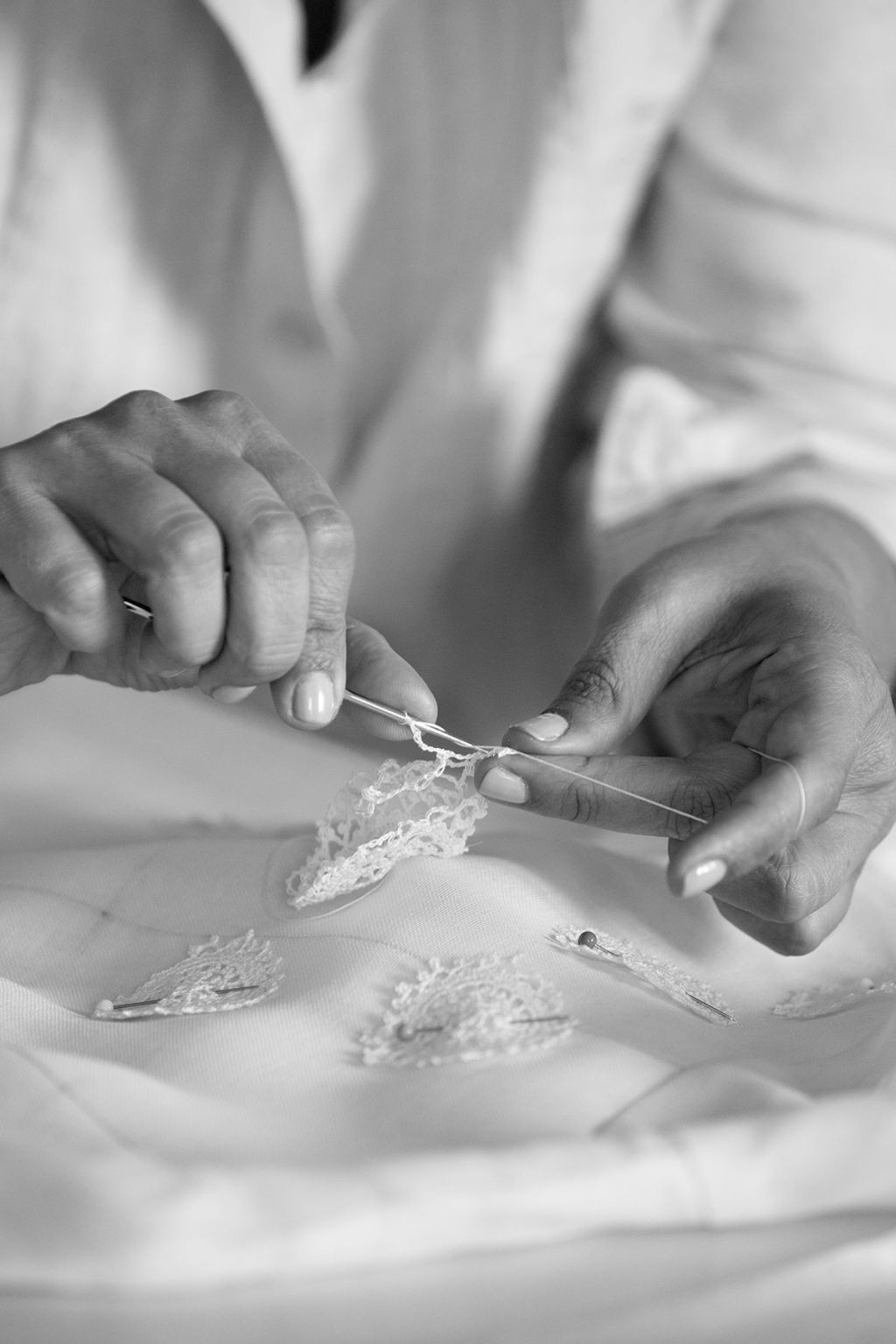
A price-segmented guide to Indian menswear that’s actually designed for occasions
Most lists of Indian menswear brands are really lists of casualwear brands. Good graphic tees, well-cut chinos, denim that fits — all useful, none of it any help when the invitation says cocktails.
This is a different list. Everything on it is design-led and made for occasions: festive dressing, weddings you’re attending as a guest, sundowners, dinners that matter. No basics brands. No fast fashion. No labels whose entire proposition is an oversized graphic shirt done competently.
It’s also separated by price, because the honest truth about Indian occasion wear is that a ₹6,000 purchase and a ₹60,000 purchase are not the same decision and shouldn’t be discussed as though they are. One is a wardrobe you build. The other is an outfit you commission.
Three tiers, and what each one is actually for.
TIER ONE — ₹4,000 TO ₹10,000 The rotation tier
Buy three or four of these and you’ve solved a season. This is clothing you wear to the sangeet in November and again at Diwali and again at a friend’s engagement in February, and nobody’s counting.
The segment barely existed five years ago. It’s now the most interesting part of the market, mostly because designing well at this price is genuinely hard and the brands that manage it have had to be clever about where the money goes.
Komal Kothari
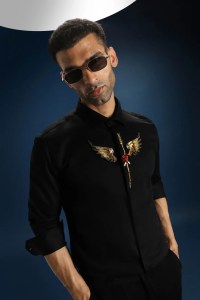
Spotted the gap in partywear early. The range is built around embellished and embroidered shirts, printed pieces and co-ord sets, with detail treated as the entire point rather than a finishing touch. Shirts land roughly ₹5,000–₹6,500, which for real surface work is competitive.
Best for: Black shirts, cocktail dressing without a jacket.
Auda
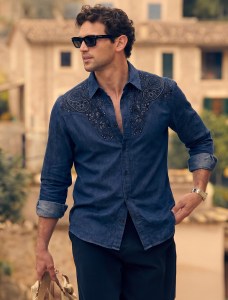
One built most explicitly around the guest rather than the groom. The premise is that a man’s life is a run of occasions — sundowners in Goa, pre-wedding rituals, cocktails, dinners that matter .Modern silhouettes, embroidery with finesse, premium natural fabrics, made in small workshops.
Best for: Cuban collars, jacquard satin shirts, comfortable co-ord sets.
Nicobar
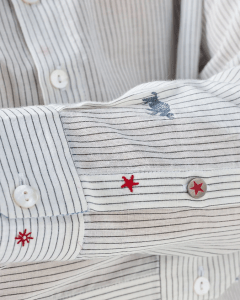
Brand offers modern , relaxed silhouettes in breathable natural fabrics . It focuses on effortless everyday style. Great choice for premium simple kurtas with a touch of embroidery.
Jaywalking
Delhi label doing contemporary menswear with a distinctly urban register — clean lines, unfussy construction, and detail that shows up on second look rather than announcing itself. Sits at the upper end of this bracket.
Best for: Understated occasion shirts, evening dressing that isn’t ethnic.
TIER TWO — ₹15,000 TO ₹30,000 The considered-piece tier
Cord Studio
Folklore, nostalgia and the visual texture of everyday India, translated into contemporary shapes with in-house prints. Slow, deliberate, entirely its own thing — which in a category built on borrowed mood boards counts for a lot.
Best for: Printed shirts, co-ords and sets with a real point of view.
Countrymade
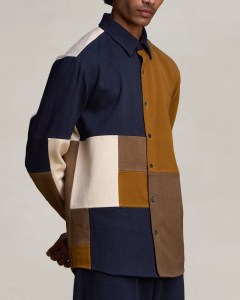
Real surface technique and real value addition. Craft handled as craft rather than quoted as decoration, then cut into silhouettes a man will actually wear rather than admire on a rail.
Best for: Craft-led pieces that still read contemporary.
Dhruv Vaish
Menswear-only, Delhi-based, working in a restrained palette with strong tailoring instincts. Bandhgalas and jackets that don’t rely on embellishment to do the work.
Best for: Structured ethnic, understated wedding-guest dressing.
Rohit Gandhi + Rahul Khanna
Long-running Delhi duo known for sharp tailoring, unusual surface treatments and a modern, slightly hard-edged glamour. Their menswear sits closer to eveningwear than ethnic — structured jackets, tuxedos, pieces with real cut to them.
Worth flagging: the label’s range is wide and the couture end runs well above this bracket. Their ready-to-wear and lighter pieces are where the ₹20,000-ish entry point sits.
Best for: Ceremonial suiting, cocktail eveningwear, anything requiring a jacket.
Asuka Couture
Delhi-based design house doing men’s ethnic and western wear for celebratory occasions, built on the recognition that men needed a space of their own in a couture market saturated with bridal. Strong on customisation.
Best for: Groomsmen, ceremonial dressing, bespoke ethnic.
TIER THREE — ₹30,000 AND UP The commission tier
Bespoke or near-bespoke, long lead times, and pieces bought for one specific event that will be photographed extensively. This is where you go when the outfit is part of the occasion rather than a response to it.
Shantanu & Nikhil
Arguably created the modern Indian menswear silhouette — the draped bandhgala, the structured ceremonial jacket, the military-inflected tailoring that’s since been imitated at every price point below it. Not nostalgic; the references are architectural rather than folk.
Best for: Grooms, receptions, anything where the photograph is the point.
Kunal Rawal
The designer who made ethnic menswear feel current rather than dutiful. Layered bundis, textured jackets, and a construction-first approach that made him the default for grooms who didn’t want to look like their fathers.
Best for: Modern ethnic, grooms and close family.
Harago
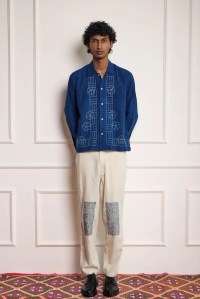
Jaipur-based, working with handwoven and vintage textiles, hand embroidery and block print, with long-term relationships with artisan communities across India. Sold internationally, and deservedly.
Best for: Craft as the entire proposition; collectors.
Kartik Research
Handcrafted work combining Indian artistry with a global aesthetic, on a slow-fashion ethos, with a following abroad as much as at home. Conceptual, textile-forward, and doing something no scaled brand can replicate.
Best for: Textile-led statement dressing.
Sabyasachi and Raghavendra Rathore
The established houses, each with a defined register — Sabyasachi’s heavily embellished heritage revivalism, Rathore’s Jodhpuri tailoring and bandhgalas. Different philosophies, same bracket.
Best for: The one outfit of the decade.
HOW TO READ THE THREE TIERS
The top high end tier has been excellent in India for thirty years. That was never the problem.
The problem was everything underneath it. A long stretch of nothing between mall polyester and designer couture, which meant a man attending six weddings a season had no good answer and mostly stopped looking for one.
That’s what’s changing, and it’s changing from the bottom up. The first tier is where the interesting work is happening right now, precisely because it has to solve for design and price at the same time — and that constraint produces better decisions than an unlimited budget does.


Leave a comment