Written by a guest contributor. All views and opinions are the author’s own.
Indian women have more choice in western wear than ever before. Dresses, co-ord sets, shirts, bodycon silhouettes and occasion wear are now available across almost every price point.
But there is still one basic problem the industry has not solved consistently: fit.
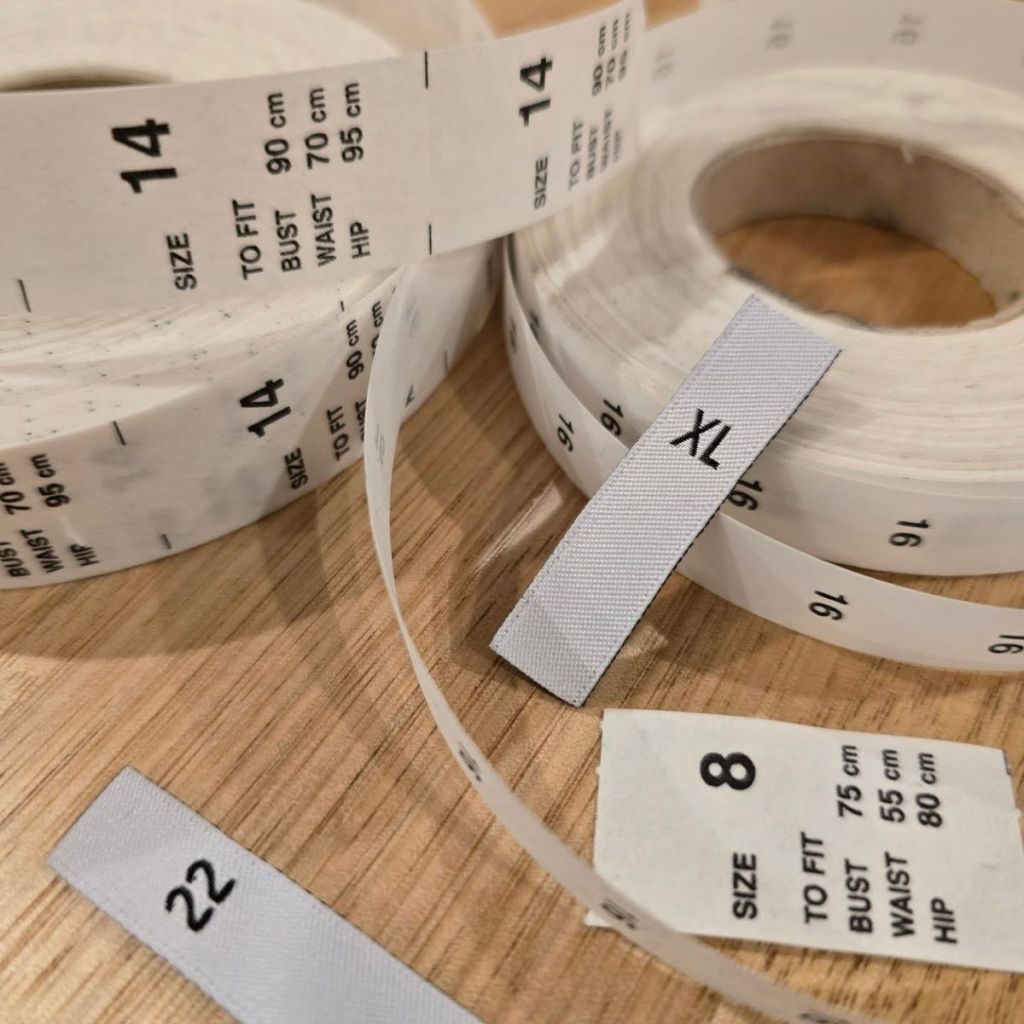
The Problem Is Bigger Than S, M and L
Most conversations around sizing focus on whether a brand offers enough sizes.
That matters, but size range and fit are not the same thing.
Two women may have the same bust measurement but very different proportions across the waist, hips, shoulders, torso and height. A dress can therefore technically match the size chart and still feel wrong when worn.
This becomes especially noticeable in western silhouettes.
A fitted dress has to work across several body measurements simultaneously. A shirt needs enough room across the bust and shoulders without becoming unnecessarily long or loose elsewhere. A co-ord set introduces another problem: the same customer may need different sizes for the top and bottom.
Simply extending an existing size chart does not necessarily solve these problems.
Indian Customers Should Not Have to Adapt to the Garment
For years, much of India’s western-wear market borrowed its visual language from international fashion.
There is nothing wrong with that. Fashion has always travelled.
But silhouettes can travel more easily than body blocks.
A garment designed around one population’s average proportions cannot automatically be assumed to fit another population equally well.
The better approach is simple: keep the contemporary silhouette, but develop and test the garment for the customer who will actually wear it.
For an Indian fashion business, that means looking at Indian measurements, real customer feedback and actual fit problems instead of treating sizing as a label attached at the end of production.
Returns Are Often Product Feedback in Disguise
E-commerce has made fit problems impossible to ignore.
In a physical store, a customer can take three sizes into a changing room.
Online, she has a product photograph, a size chart and perhaps a model’s measurements.
If the garment arrives and doesn’t fit, the business may record the outcome simply as a size-related return or exchange.
But that data can tell us much more.
Are customers repeatedly sizing up in one silhouette?
Is a particular dress tight around the bust despite fitting correctly at the waist?
Are sleeves consistently too long?
Does one fabric generate more exchanges than another?
Are customers buying the same nominal size across different products but experiencing completely different fits?
These are not merely customer-service problems. They are product-development signals.
A D2C brand has an advantage here because the feedback loop between the customer and the product team can be relatively short.
The challenge is whether the business actually uses it.
Fabric Changes What a Size Means
Another overlooked issue is fabric behaviour.
A size M in a stretch knit cannot be treated exactly like a size M in a non-stretch woven fabric.
Rayon, polyester, satin, ribbed knits and stretch fabrics behave differently on the body.
Yet customers frequently encounter one generic size chart across an entire website.
That makes shopping easier operationally for the retailer but not necessarily for the customer.
Useful sizing information should help a shopper understand not only measurements but also how the garment is intended to fit.
Is it body-fitted?
Relaxed?
Oversized?
Does the fabric stretch?
Should someone between two sizes choose the larger size?
Those small pieces of information can sometimes be more useful than adding another paragraph of marketing copy to the product page.
Better Product Pages Can Reduce Fit Anxiety
Sizing should not be hidden behind a small link beside the size selector.
For fashion e-commerce, it is part of the product.
A useful product page can show garment measurements, model measurements, the size worn by the model, fit type, fabric stretch and a simple recommendation for customers who fall between sizes.
Brands can also use customer feedback to improve guidance over time.
If buyers repeatedly report that a particular style fits smaller than expected, the answer should not simply be handling more exchanges efficiently.
The product page – or eventually the pattern itself – should change.
Indian-First Sizing Is Also a Commercial Decision
Better fit sounds like a customer-experience initiative, but it affects the economics of an online fashion business.
Every avoidable exchange involves logistics, customer-support time, reverse movement, quality checking, repacking and inventory that cannot immediately be sold again.
A garment that fits correctly the first time avoids much of that friction.
More importantly, fit influences whether a customer returns to the brand.
A shopper who discovers that a brand’s size M reliably fits her does not have to restart the sizing decision with every purchase.
That confidence has value.
For a D2C fashion business, consistent fit can become a retention mechanism.
What Indian Fashion Brands Can Do
The solution does not require every brand to reinvent sizing overnight.
It starts with treating fit as data.
Brands can examine exchange reasons by SKU rather than only at the store level. They can compare fit feedback across fabrics and silhouettes. They can conduct fit trials with women representing different body proportions rather than relying on a single sample model.
They can make product-specific sizing guidance clearer.
And when enough evidence accumulates, they can change the garment.
That final step is important.
No amount of website optimisation can permanently compensate for a pattern that consistently fits the customer badly.
The Opportunity
Indian western wear does not need to become less global in appearance.
It needs to become more local in understanding its customer.
Indian women already consume global fashion trends in real time. They know the silhouettes they want.
The opportunity for Indian brands is to take those silhouettes and become exceptionally good at making them work for the women buying them here.
That means thinking beyond S, M, L and XL.
It means understanding proportions, fabric behaviour, customer feedback and the relationship between fit and returns.
The brands that solve this well will not merely have better size charts.
They will have customers who know what size to order – and feel confident that when the parcel arrives, it will actually fit.
Author Bio
Nikunj Sakariya is the founder of MyWestern, a Surat-based women’s western-wear brand. His work involves apparel manufacturing and D2C fashion, with a focus on product fit, customer experience and building western wear for Indian consumers.


Leave a Reply